Carbon Footprint
Collection of activity data, emission factors, calculation of product-related emissions and management of result versions.
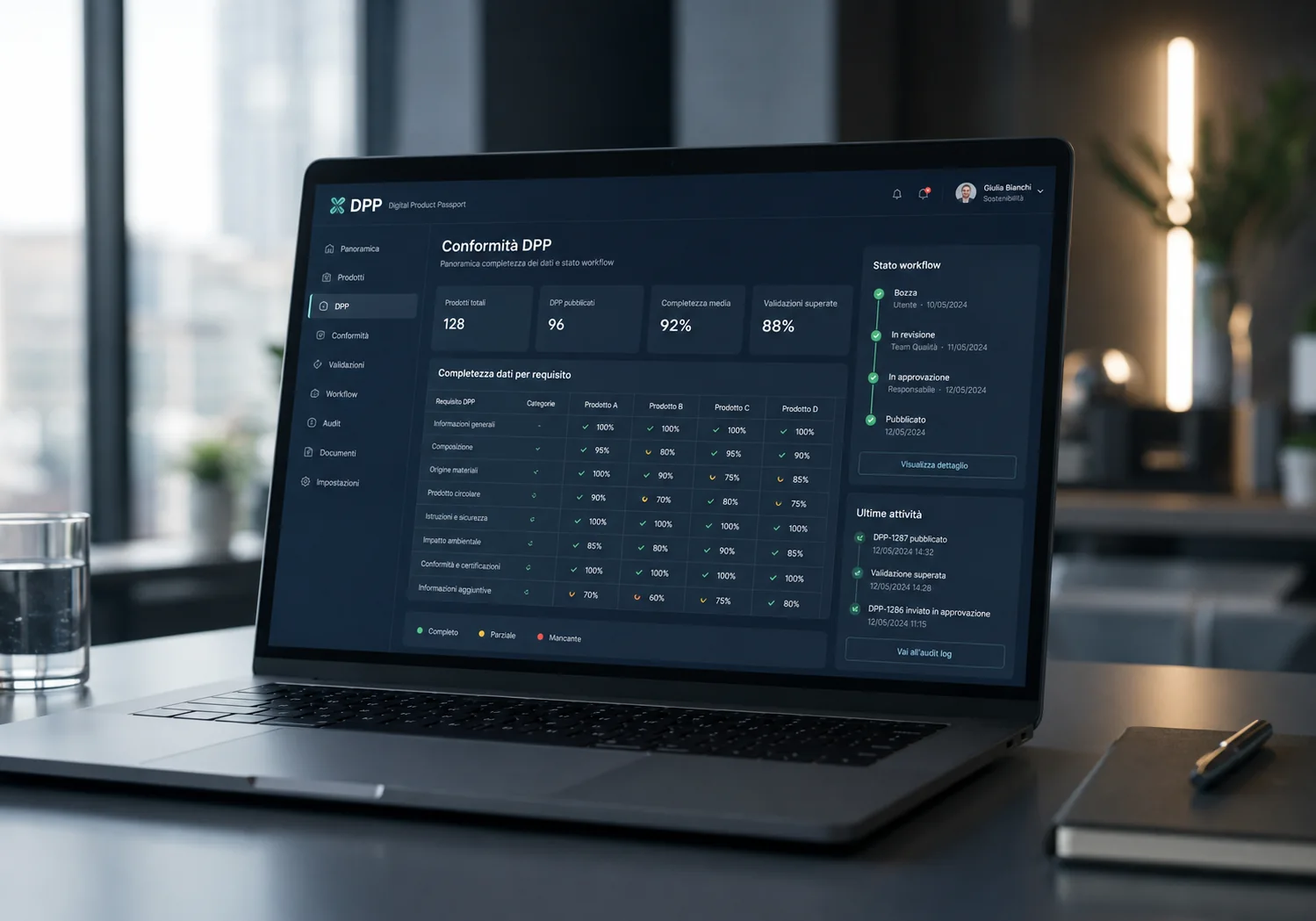
NexusDpp can integrate specialised microservices to calculate, collect and update environmental and technical data, connecting the results to the product’s Digital Product Passport.
Each module operates within a defined scope and returns structured data that can support the DPP, internal controls and business documentation.
Collection of activity data, emission factors, calculation of product-related emissions and management of result versions.
Organisation of the data required for Life Cycle Assessment, including study boundaries, scenarios and environmental indicators.
Acquisition of battery technical data such as state of charge, state of health, cycles, temperatures, alarms and usage events.
The Carbon Footprint microservice can collect consumption, materials, transport, production processes and supplier data while preserving the connection with the sources used and the relevant product version.
NexusDpp can organise the inventory, scenarios and results of a lifecycle assessment, supporting collaboration between the company, environmental consultants, laboratories and verifiers.
Definition of the product, functional unit, lifecycle stages and reference scenarios.
Materials, energy, processes, transport, use, maintenance, end of life and partner data.
Data origin, reference period, collection method, reliability level and linked documents.
Environmental indicators, comparison of alternatives and updated versions when the product or value chain changes.
Selective publication of results and controlled access to the complete supporting evidence.
For batteries and energy-storage systems, NexusDpp can connect BMS data to the battery’s digital identity while separating public data, technical data and confidential information.
“The DPP can combine static product data with dynamic usage information while applying different access rules for customers, service teams, manufacturers and verifiers.”
NexusDpp operating modelA company can start with one module and add further capabilities as more data becomes available or project objectives evolve.
Definition of scope, required data, roles, update frequency and expected outputs.
Connection with business systems, structured files, calculation tools, IoT systems, BMS and document sources.
Completeness checks, approvals, versions, change traceability and role-based access.
Datasets, documents, factors, reports and attachments remain linked to the result generated by the microservice.
Results can be recalculated when materials, suppliers, processes, usage or technical condition change.
The passport displays only the information authorised for each user and project configuration.
Carbon Footprint, LCA and BMS can be adopted separately or combined to create a progressive data foundation for sustainability, compliance, service and lifecycle management.
Select the priority microservice and map available data sources.
Configure the data model, collect evidence and complete the first processing cycle.
Internal validation, optional specialist review and connection to the DPP.
Automate updates and activate additional microservices.