
Manufacturer and production site
Operator identity, roles, delegated tasks and documented responsibility.
NexusDpp organises technical data, evidence, identifiers, access and updates across manufacturers, importers, suppliers and authorised stakeholders.
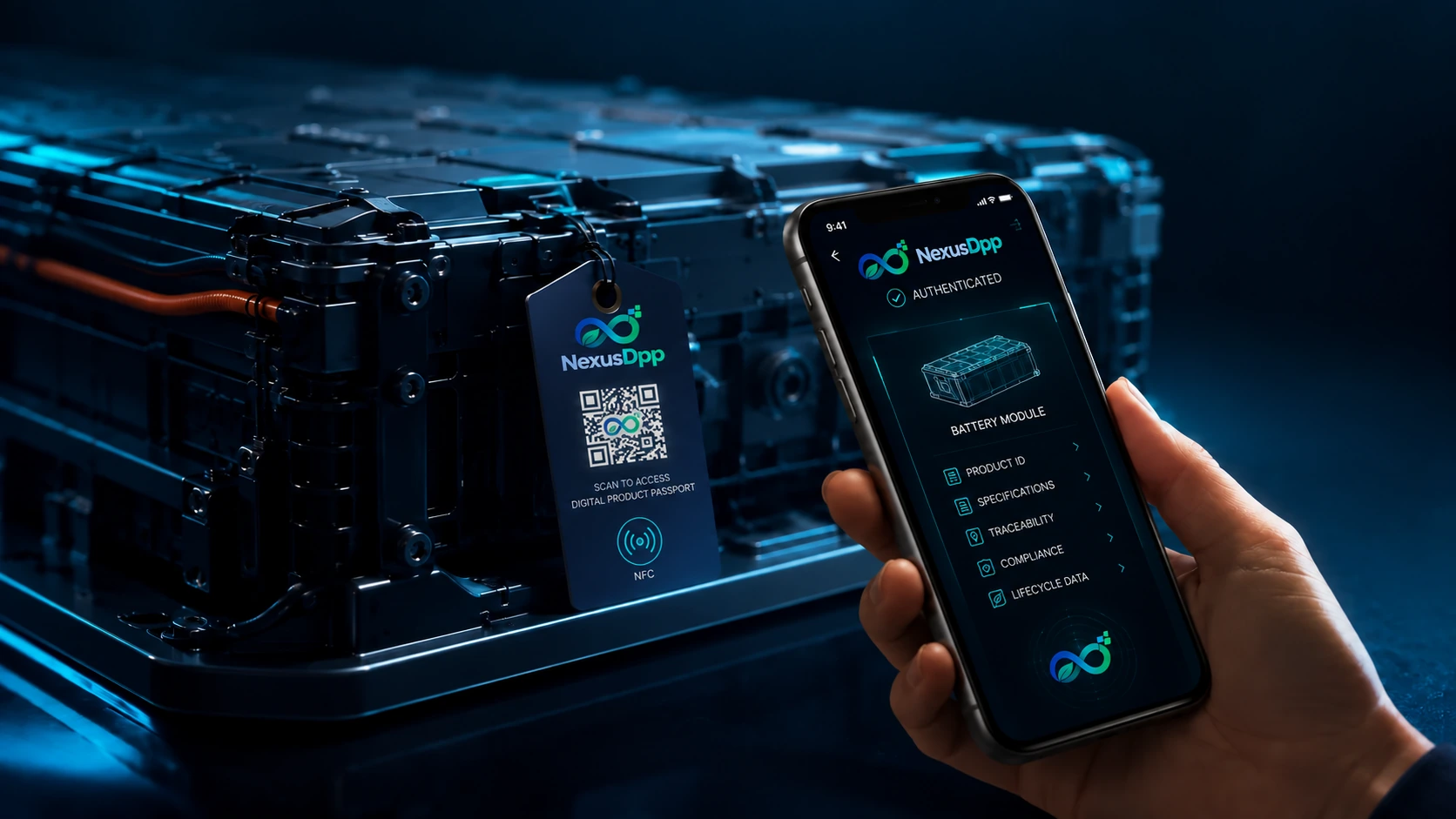
The European Commission published updated preparation guidance bringing together 71 data points and indicating, for EV, LMT and industrial batteries, whether each point is mandatory, optional, conditional or not required to be completed/displayed as of February 2027. The guidance supports preparation but does not create new legal requirements and must be read with Regulation (EU) 2023/1542 and applicable acts.
Read the NexusDpp 71-data-point guide · Open the updated demonstrative LMT Battery Passport · Source: European Commission, 21 August 2026
Article 77(9) set 18 August 2026 for the implementing act on legitimate-interest users. The Commission's public roadmap now places the Batteries access-rights implementing act in Q4 2026. NexusDpp therefore keeps role and access policies configurable, separating view, download, sharing and reuse permissions.
The Registry stores unique identifiers and registration metadata while detailed passport data remains decentralised. Battery projects can already test identifiers, APIs, registration and electronic evidence.
NexusDpp structures the work required to obtain information from multiple parties and keep it linked to the identified battery or product.
Operator identity, roles, delegated tasks and documented responsibility.
Technical data, materials, components and identifiers organised by category.
Declarations, certificates, reports and attachments linked to relevant data.
Technical and usage updates can be integrated when available and applicable.
Maintenance, replacement, reuse and lifecycle updates.
Information supporting recovery, recycling and lifecycle closure.
NexusDpp enables the importer to invite a manufacturer, define required fields, request documents, review information and approve the passport before publication.
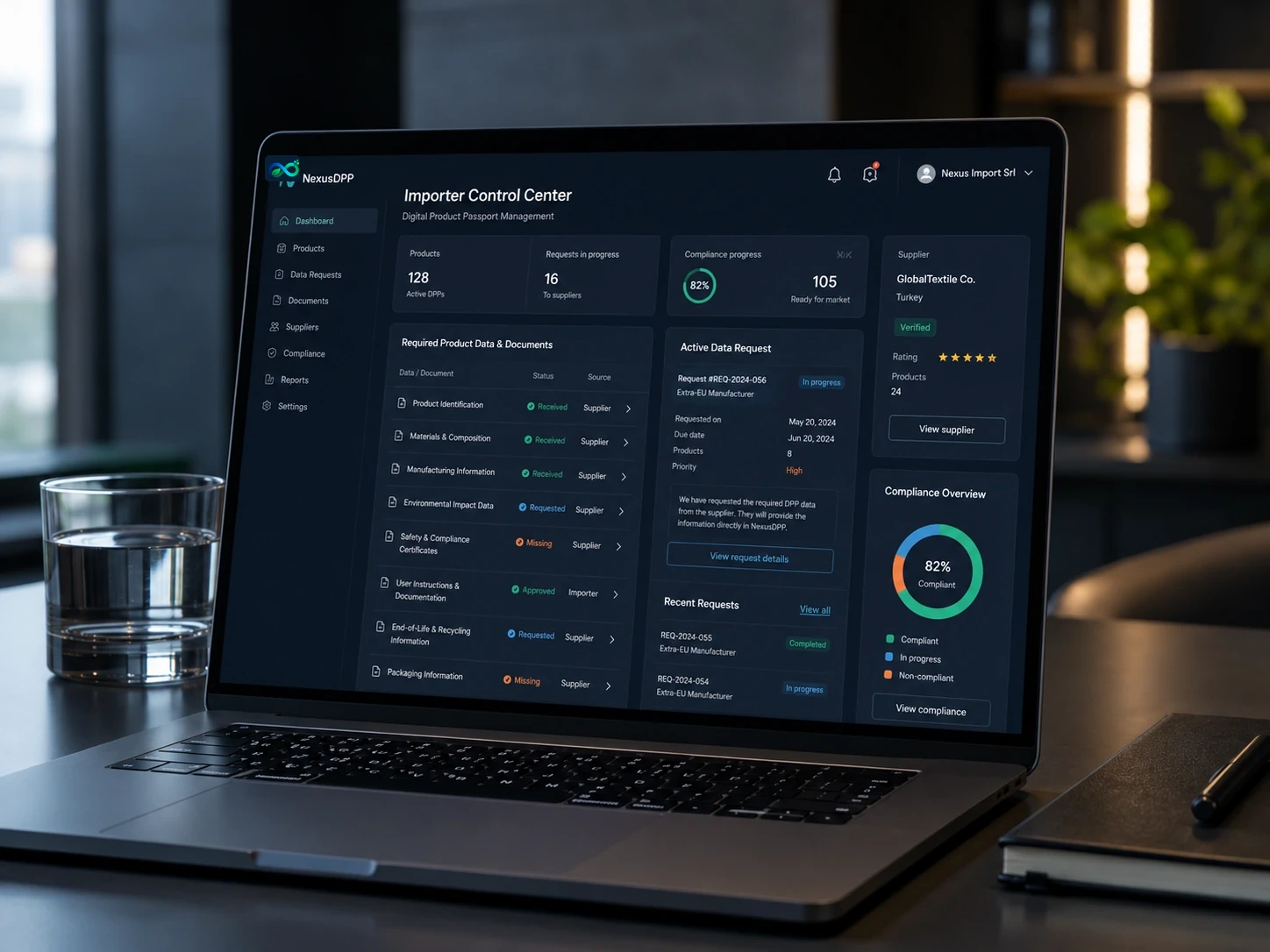
A passport can start with available compliance data and documents and later receive technical information or lifecycle events.
Master data, orders, batches and documents can feed the workflow.
Battery status information can be integrated where available and authorised.
Public view and protected layers for authorised operators.
From 18 February 2027 for LMT batteries, industrial batteries with a capacity greater than 2 kWh and electric-vehicle batteries. The date does not automatically cover every cell or battery; category and operator role must be checked under Regulation (EU) 2023/1542.
Yes. The workflow collects data from non-EU manufacturers while keeping checks, approvals and responsibility with the importer.
Yes. The platform manages versions and lifecycle events such as maintenance, recalls, second life and end of life.
No. A project can begin with available data and evidence, then add technical integrations in a later phase.
The NexusDpp pilot tests technical data, manufacturer evidence, importer accountability, identifiers, QR/NFC, lifecycle and a targeted BMS or business-system integration on a real battery.