EU DPP Registry
Identifiers, metadata, APIs and proof of registration.
Open the guideNexusDpp connects rules, datasets, roles and evidence to a versioned workflow. The platform is configurable by product category and separates public information from data available to partners, verifiers and authorities.
Compliance combines DPP infrastructure with product law. A generic model is not enough: the project needs to identify the act defining data, granularity, access, retention and application date.
| Layer | What it defines | Project impact |
|---|---|---|
| ESPR — Regulation (EU) 2024/1781 | Framework, DPP system, identifiers, access and product-specific acts | Open, interoperable architecture governed over time |
| Registry — Implementing Regulation (EU) 2026/1778 | Registration, access management, required data and Registry architecture | Connector, API, status, errors and proof of registration |
| Standards — Decision (EU) 2026/1736 | Harmonised references for protocols, identifiers, carriers, storage, APIs and interoperability | Verifiable technical choices and portability |
| Product legislation | Dataset, methods, granularity, authorised actors and application date | Category templates, validations, evidence and workflows |
| Batteries Regulation | Passport from 18 February 2027 for LMT, industrial batteries above 2 kWh and EV batteries | Sector dataset, lifecycle and the first fixed DPP deadline |
NexusDpp does not treat compliance as a final document. Requirements are connected to fields, sources, evidence, roles and states that prevent an unapproved version from being published.
Category determines fields, units, conditional rules, evidence and dates. Template versions remain traceable.
Each item has a contributor, reviewer and person accountable for its use in the passport.
Format, range, unit, consistency, attachments and expiry are checked before approval.
Data is exposed to the public, partners, recyclers, verifiers or authorities according to role.
Changes, author, date, reason, evidence and the link to the previous version remain available.
Only approved identifiers and metadata enter registration; status and electronic proof return to the product file.
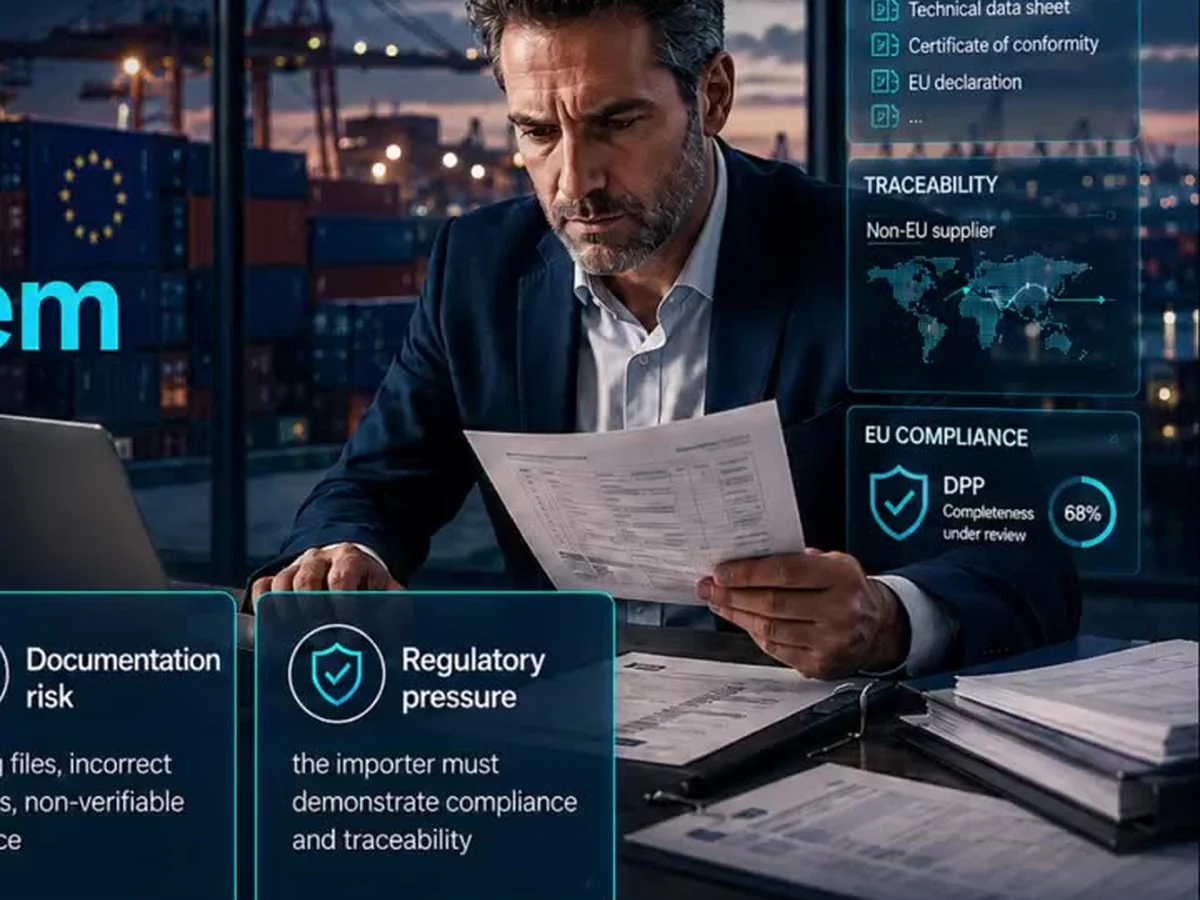
The system distinguishes contribution, checking, approval, registration and maintenance. A supplier can contribute without seeing the full dossier; a verifier can record an outcome without changing source data.
A controlled route connects compliance, supply chain and technology.
Product, role, legislation, thresholds and date.
Dataset, identifiers, evidence, access and owners.
Portals, validations, approvals, APIs and carrier.
Approved version, logs, publication, registration and proof.
NexusDpp supports process organisation and execution. It does not replace legal classification, laboratories, notified bodies or the economic operator’s responsibilities.
NexusDpp guides separate common infrastructure from product-dependent requirements.
Identifiers, metadata, APIs and proof of registration.
Open the guideCarriers, protocols, storage, APIs and interoperability.
Review the standardsFixed dates, roadmaps and scope checks.
Check the timeline